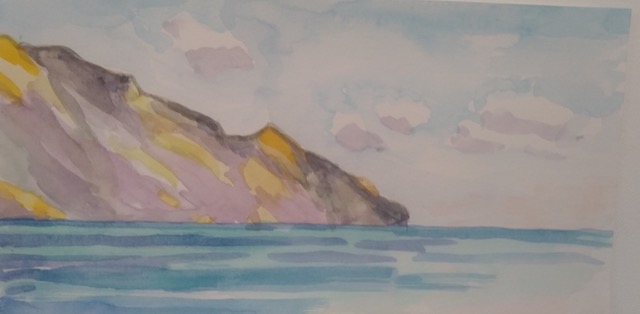
TO LIVE IN GREECE is to be blessed; blessed by light, blessed by mauve mountains washed by fresh thyme in the early summer and blessed by a cool breeze in the early evening as you lie on warm stones by the sea and listen to children playing. To live in Greece is to understand history; to live daily with catharsis, tragedy, pathos and comedy. It is to be blessed and it is to be cursed; cursed by stubborn people, cursed by lies, delays, unexplained disappearances, unexpected arrivals. To live in Greece is to be cursed by oppressive heat and by the knowledge that the soil is soaked in blood. Greece is not confined by its boundaries; everyone who looks Greek, thinks Greek or speaks Greek is Greek. There are Greeks in Afghanistan and Mozambique, Australia and America. And yet when asked the people do not tell you they come from Greece. They say they come from this village or that island. Greece does not exist and yet it is everywhere.
To live in my village is to know secret corners; places I can visit, places no better, nor worse than anywhere else in the world, but little corners that distil my history and my feelings for life. Balconies, where I can sit as night falls and listen to soft voices from the village people as the sea grows black and the sky turns a unique blue before it too darkens and the stars spread themselves around. I can hear owls; the Little owl that appeared on drachma coins in Athens 2500 years ago and Scops owl with its sharp notes; call return, call return, call return. There are windows here where I can sit and watch the church tower achieve its white silhouette against the night sky. There is a room where I lie at night and listen to the fishing boats come and go. That’s Sortiris now, going north, and Costas too. Later it is Iannis with his overpowered outboard, or Karellas with an engine as clapped out as he is, in a boat kept together by thick, gaudy paint. In the morning I hear Michaelis with his dogs, his ninety yearold mother and his wife going to Saria. They will stay there for a week or two and they like fresh milk so they take goats with them in the boat.
I could lie in bed all day and know the village from its sounds. In the morning there are cockerels, in the evening the sound of goats and sheep and all day dogs bark and children play. Then there are the voices of the women, their own private language low with chuckles and laughter round the oven as they bake bread, strong as they talk to a friend, or a sister, or a child further away. The tourist boat comes at its time and leaves with the flotsam and jetsam that is the European tourist trade; Danish, Dutch, German, Italian, a babble of barbarian voices and hysterical laughter. Now and then the ferry boat arrives, chains tumbling to the sea as the anchor seeks purchase against our strong winds. I hear the winds too. They play with my shutters; Trasmontana, Sirocco, Meltemi, Maestros. These names are ancient and Venetian; they remind us of what we were and tell us something of what we are. And then there is the sea, never silent, never still, the waves washing the stones in rhythms in the summer or pounding rocks when winter comes.